Stop Should-ing on Yourself Every year at this time, I get anxious about productivity. With two kids about to wrap up the school year and my oldest already home from college for the summer, I'm once again wondering how I'm going to get any writing done. Don't misunderstand me, parenting is both challenging and rewarding all year long, but freedom from the regimented schedules of September through May can feel restrictive in a different way.
Every year at this time, I get anxious about productivity. With two kids about to wrap up the school year and my oldest already home from college for the summer, I'm once again wondering how I'm going to get any writing done. Don't misunderstand me, parenting is both challenging and rewarding all year long, but freedom from the regimented schedules of September through May can feel restrictive in a different way. After brainstorming as a family, we came up with a few possible remedies.
Consistency Equals Comfort
As much as the neurodivergent artist in me wants to dismiss the importance of routine and predictability as BORING, I must (begrudgingly) admit these tools help rather than hinder my creativity. Knowing I have time set aside, even if its only for a few hours every other day, silences the inner voice that insists I will never have time to write again. On the flip side, it also alleviates my kids' concerns that we will never have time to do anything fun. The key is to first establish a schedule that works within our current framework, resisting the trap of setting myself up for failure and disappointment with unrealistic expectations. My writing routine looks different in the summer months not only because there are suddenly three additional humans in the house seemingly in constant need of food, entertainment, and transportation, but also because I am an outdoor cat. No, that's not the right metaphor because I'm also extroverted. What's the most social animal, a honeybee? Back to the point: I thrive on spending time outside with other people and there is simply more opportunity to do so when the weather is pleasant and the schedule more flexible. So, instead of beating myself up, or "should-ing" all over myself about a dip in productivity, I'm learning to embrace that a writer is only one of many things I am, and that if I starve those other parts, my creativity will ultimately suffer for it, too.
Friends and Family Field Trips
At ages 9, 13, and 18, my kids are more independent, but also more interested in and easier to take along on bookish errands and events. I may not get six hours of uninterrupted writing time every day (who am I kidding, I rarely manage that any time of year) but there are many aspects of the writing life I can, and prefer to, do with company. Libraries, bookstores, readings, Write-a-thon's, conferences, and other locales to research are all good field trip opportunities. Whenever possible, I like to combine items from my to-do lists with one from my want-to list. Need to move my body, want to see a friend, I know which one to message about going for a hike. (Bonus: we also talk shop and solve several plot holes on the trail.) I've loved involving people from other parts of my life in my process, from asking a self-proclaimed Pinocchio scholar friend of my college kid for research support, to learning how to robot from my kids' favorite dance instructor (video coming, don't you worry).
Mix it Up
A new season is a good time to try something new and different. With my debut novella coming out in June, I'm having fun with marketing, designing swag with much-needed help from my teenager, scheduling and recording podcast interviews, and connecting with readers online and at events. Sometimes focusing on short fiction, especially flash, helps bridge the gap between desire and time to create. Instead of comparing the yield to some other writer's, or even my own from the past, I'm trying to honor the writer I am today, in this season, knowing it will change again and again throughout my career.
The Myth of Balance
I once heard an alternative to the "having it all" myth that really resonated with me. Instead of imagining ourselves as jugglers sweating to keep all the balls in the air, let's visualize some of the objects as glass and others rubber. Some of the things we juggle are fragile and precious, and if we drop them all together, they will shatter. Others are rubber and can bounce. The categorization will look different for each of us. For me, I've learned the hard way my health can't be neglected and so I prioritize it even when it means sacrificing other things I'd rather be doing. I also choose not to drop certain relationships, particularly with my kids and spouse. Housework, on the other hand, is rubber. That one can bounce away and never come back for all I care. Writing is a special kind of hybrid: precious but sturdy. I can let it bounce for a time, knowing it will always be there when I return.
Whether or not you're in the same stage of life as a parent and writer, if you struggle with some of the same debilitating self-judgement around the cyclical nature of your creative output, I'm here to say, stop "should-ing" on yourself this summer. The short, dark days will be back before we know it and we'll all be curled up inside by the faint glow of our laptops cranking out words to sustain us until the outer world beckons once more.
Rachel Horak Dempsey is a writer of dark fiction living in Denver. Her debut novella PN0K0, a retelling of Pinocchio with a terrifying techno twist, is forthcoming from M4L Publishing on June 9, 2026. Her short fiction is available from Creepy Pod, Brigids Gate Press, Timber Ghost Press, Twenty Bellows (Pushcart nominated 2024), Stars and Sabers, and others. Rachel is also the editor of the anthology Horizons 2 from Twenty Bellows. She currently serves on the Executive Board of Rocky Mountain Fiction Writers and appears regularly on the Writers Who Read podcast as a guest host. Rachel holds a BFA in Drama and English from NYU, a Master’s in Journalism from Georgetown and an MFA in Creative Writing from Regis University.
Retellings: Love 'em or Leave 'em? Recently on Instagram, a certain formerly independent bookstore posted the following self-identified hot take: "We don't need any more re-writes of classics." As someone who just sent final edits on a re-imagining of Pinocchio to her publisher, I hope this is indeed an unpopular opinion.
Recently on Instagram, a certain formerly independent bookstore posted the following self-identified hot take: "We don't need any more re-writes of classics." As someone who just sent final edits on a re-imagining of Pinocchio to her publisher, I hope this is indeed an unpopular opinion. In the horror space where I primarily play, this certainly seems to be the case. Contemporary releases abound with reinterpretations of classic stories. Acclaimed authors like A.C. Wise, Cynthia Pelayo, and Mona Awad draw from the already dark source material of fairy tales to explore timeless and timely themes like beauty standards, power imbalance, and generational trauma. Gwendolyn Kiste and Kiersten White center slighted characters from classic literature such as Jane Eyre's Mrs. Rochester and Dracula's Lucy Westenra. Other horror writers, including Erika T. Wurth, V. Castro, and Rachel Harrison, find inspiration from traditional monsters of folklore like La Llorona, the Lofa, and the Wendigo. Maybe this is a hot take as well, but I'd go so far as to say every story about a vampire, werewolf, witch, or ghost is a kind of retelling. The same could be said for fantasy with fairies, dragons, or elves. Pick any genre and you'll find the same tropes and stock characters running throughout. Like musicians, we writers aren't inventing the building blocks, rather arranging them in new and (hopefully) compelling ways. And that's a good thing. Art only exists in relationship. Context, including the artist's background and influences, helps define meaning and motivation. This also contributes to the lasting impact of a work, as its resonance may evolve over time, changing with each location, historical period, and individual patron.
The most important aspect of adapting a classic tale is not where it lands on the spectrum of source accuracy versus originality, but motivation. Why an author chooses to revisit familiar characters and worlds will determine how the story changes. Maybe, as in the examples above, you want to elevate a traditionally side-lined or voiceless character, making space for different, often marginalized perspectives. Or perhaps you approach retelling as resurrection, raising a long-buried idea to reexamine it through a contemporary lens. Regardless, the next generation of readers and writers are primed for retellings as evidenced by the rise of fan fiction. As a society, we return to beloved characters, worlds, and plot structures for many reasons, from seeking comfort in the familiar to desiring repair of a harmful stereotype. Working in an intertextual way, with an awareness of how your story exists in conversation with literary tradition, both broadens and deepens impact. You'll have a wealth of potential comparative titles and therefore a pre-existing readership, meeting fans where they are, with the opportunity to alter and expand the way they see common concepts.
I would argue we need retellings more than ever, for as they say about history, those who forget the past are doomed to repeat it. We need reimaginings of stories from different cultures, groups, and time periods, especially ones overlooked by the dominant social class.
So, what's your take on retellings? Love 'em or leave 'em?
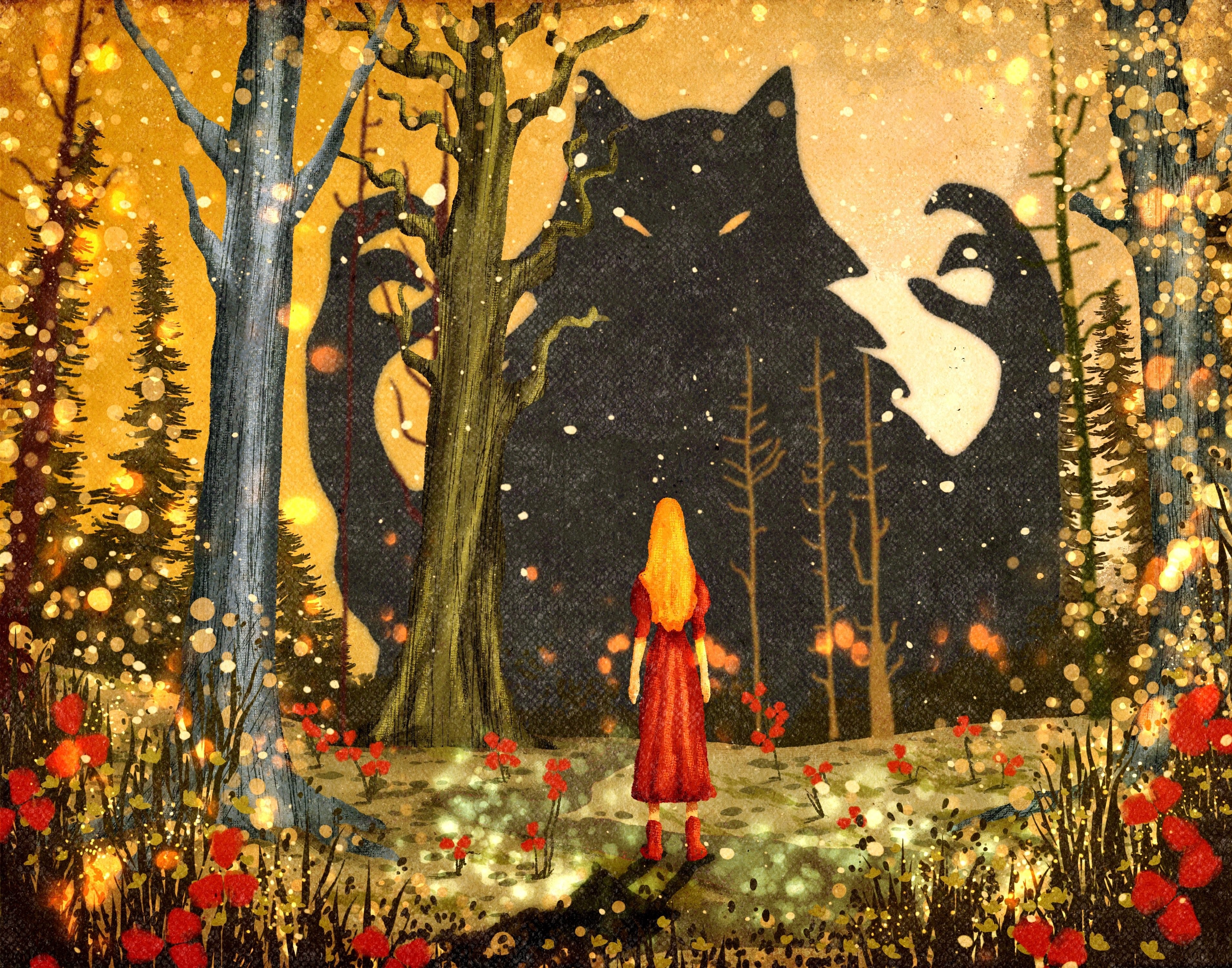
Image by Betidraws from Pixabay
Rachel Horak Dempsey is a writer of dark fiction living in Denver. Her debut novella PN0K0, a retelling of Pinocchio with a terrifying techno twist, is forthcoming from M4L Publishing on June 9, 2026. Her short fiction is available from Creepy Pod, Brigids Gate Press, Timber Ghost Press, Twenty Bellows (Pushcart nominated 2024), Stars and Sabers, and others. Rachel is also the editor of the anthology Horizons 2 from Twenty Bellows. She currently serves on the Executive Board of Rocky Mountain Fiction Writers and appears regularly on the Writers Who Read podcast as a guest host. Rachel holds a BFA in Drama and English from NYU, a Master’s in Journalism from Georgetown and an MFA in Creative Writing from Regis University.
Writers on Writing: All the Advice You Need for 2026 We’ve collectively made another trip around the sun, welcoming in a new year. If you’re anything like me, the start of a new year means setting goals and, I hesitate to say it, making resolutions. And since you’re reading a blog about writing, there’s a good chance one or two of your resolutions for 2026 involve writing.
We’ve collectively made another trip around the sun, welcoming in a new year. If you’re anything like me, the start of a new year means setting goals and, I hesitate to say it, making resolutions. And since you’re reading a blog about writing, there’s a good chance one or two of your resolutions for 2026 involve writing.
I’ve found that making progress toward any worthwhile goal, whether it’s learning something new, changing a habit, eating better, exercising more, or completing a writing project, is much easier when you have a team of supporters cheering you on. (The exception to this rule is the year I resolved to dunk a basketball on a ten-foot rim; gravity and genetics conspired against me in a way that no support system could overcome.) I’ve also found that the writing community is as generous and supportive of a group as you’re likely to encounter.
I reached out to authors I know, both inside and outside RMFW, and asked them what advice they would share with writers seeking to complete their first novel in 2026. Their responses were solid gold that apply whether you’re a new or experienced writer and whether you write novels or a different format. I hope you’ll bookmark this page and come back to it in a month or two or six when your goal seems out of reach and you need a few words of wisdom to get back on track (or just the knowledge that there’s a whole community wishing for your success).
“Write frequently. Read equally as much.” – Lucille C. Guarino, author of Elizabeth’s Mountain
“You can’t edit a blank page. Get your thoughts down on paper no matter how messy or disjointed. You can always go back and revise.” – R. Ghrist, author of I Am Joey
“One word: accountability. Whether it’s a critique group, beta reader or mentor, choose someone to help you establish deadlines and honor them. Repay the favor and you’ll benefit even more.” – Rachel Horak Dempsey, debut novella coming summer 2026
“Write the book you want to read. Write the book you’re still passionate about hundreds of drafts later. The love will come through in the prose.” – Del Blackwater, author of Dead Egyptians
“Write. Edit. Repeat.” – Mimi Wahlfeldt, Author of DARE
“If you want to be a great writer, be a great reader. Read everything in your genre and incorporate the best sellers’ wisdom into your own writing style.” – Gary Gerlacher, author of the A.J. Docker and Banshee thrillers
“First draft: Write, don’t think. Just get it down on paper/hard drive. Subsequent drafts: Rewrite, rewrite, rewrite, until you’re convinced you can’t possibly make it any better, then rewrite, rewrite, rewrite some more.”
– Scott Graham, National Outdoor Book Award-winning author of Grand Canyon Sacrifice
“Write the stories that speak to you, not what you think people want.” – Lena Gibson, author of the Train Hoppers and Love and Survival series
“Find (or make) a writers group.” – R Hall, winner unpublished novel/historical fiction AZ Writers Magazine
“Ignore the critic in your head giving you negative feedback. It’s usually inaccurate, and why authors need to just sit down and write and leave the editing to an editor.” – Paulette Mahurin, author of Two Necklaces
Don’t tell everyone you’re writing a book. Keep your first draft to yourself. Plot is built through characters in action. If you’re stuck, ask yourself, what would this character do next? But know your ending, that will give you a target to write toward. – Elena Taylor, award-winning author of mysteries and suspense
“I used to keep a notebook by my bed so I could jot down wonderful descriptions, physical expressions, how an author formats dialogue, or uses slang. I am not afraid of underlining in a book—to record fabulous prose I want to find again. I also dog-ear pages! Finding something well-written that says more than the few words used is like discovering a treasure. I also love to record the first lines of a book that really draw you in. I figure I am collecting evidence of what makes a book great, in hopes that someday, I might write something brilliant, too.” – Connie Morgan
“Invest in your characters. Give them worthwhile goals, humanizing flaws, and room to grow. A great plot hooks readers, but great characters keep readers coming back for more.” – Travis Tougaw, author of the Marcotte/Collins Investigative Thrillers
“Don’t write to get it perfect on the first or second try. Write to tell a story. Write to create a world where readers can escape, have fun, forget. Near perfection comes in the editing.” – Joseph Lewis
“Don’t wait for permission to write your story. Is this good enough? Who would want to read that? What if there are too many books like this already? Am I dating this story by including this detail? Shut all that down and write.” – Amy Armstrong, not a librarian
“Don’t let yourself get stuck during the rough draft—if a line evades you, skip ahead. BUT feel free to take as much time as you want in your absolute favorite scenes. In that case, a bit of agonizing (ONLY a bit, and only the healthy kind) is a load of fun.”—Gabriella Batel
“Having read dozens of first novels in manuscript over the years, I find myself dispensing the same advice in almost every instance, and that is: Switch your first and second chapters. Too often new novelists feel they can’t begin their story without introducing their characters to the reader, leading to a first-chapter backstory speed bump. Begin in the story, and provide any required background later, ideally in small, digestible bites.” – Chuck Greaves, author of The Chimera Club
“Don’t worry about perfection at first or you will never get that first draft done. Just get the words/ideas down as they come. There will be plenty of opportunities to revise and edit later. ” — Ivanka Fear, author of The Dead Lie
“Even though you will spend hours alone writing your first novel, the total solo hours should always be less than the hours you spend with other writers (in person and online) learning, teaching, encouraging, critiquing, praising, supporting, and being there for each other—the writing community will make your first book better.” – Cam Torrens, author of the Tyler Zahn thrillers
“If you don’t have an editor friend or a writing/critique partner, group, or buddy, find one in 2026. You need at least one more pair of eyes on your manuscript before you send it out to agents, publishers, or readers, because you want it to be as good as it can possibly be. ‘Good enough’ seldom is, and you don’t get a second chance to make a great first impression in this industry.” – Kelley J. P. Lindberg, adult and YA author
“As you develop your characters, don’t be afraid to let them change the story. Their personalities might take you down a path you hadn’t anticipated.” – Scott Fleuter, author of Behind the Badge.
Travis Tougaw grew up in a military family. As a perpetual “new kid,” he quickly learned the value of sharing stories to connect with others. Having settled down after his own stint in the Air Force, Travis stopped relocating, but he’s never stopped telling stories. He’s always on the lookout for characters and storylines that will grab readers’ attention and keep them turning pages. Travis lives in Colorado with his wife, children, and an enormous dog. When he’s not writing, he enjoys reading, outdoor activities, playing musical instruments, and trivia competitions. The first three books in his Marcotte/Collins investigative thriller series (Foxholes, Captives, and Last Call) are now available. Learn more about Travis and his books at https://travistougaw.com.

 Rachel Horak Dempsey is a writer of dark fiction living in Denver. Her debut novella PN0K0, a retelling of Pinocchio with a terrifying techno twist, is forthcoming from M4L Publishing on June 9, 2026. Her short fiction is available from Creepy Pod, Brigids Gate Press, Timber Ghost Press, Twenty Bellows (Pushcart nominated 2024), Stars and Sabers, and others. Rachel is also the editor of the anthology Horizons 2 from Twenty Bellows. She currently serves on the Executive Board of Rocky Mountain Fiction Writers and appears regularly on the Writers Who Read podcast as a guest host. Rachel holds a BFA in Drama and English from NYU, a Master’s in Journalism from Georgetown and an MFA in Creative Writing from Regis University.